A Small Harvest Supper, Planned Around What Is Ready
Plan a small harvest supper around produce already ready to pick, with a simple menu, shared jobs and enough room for the evening to unfold.
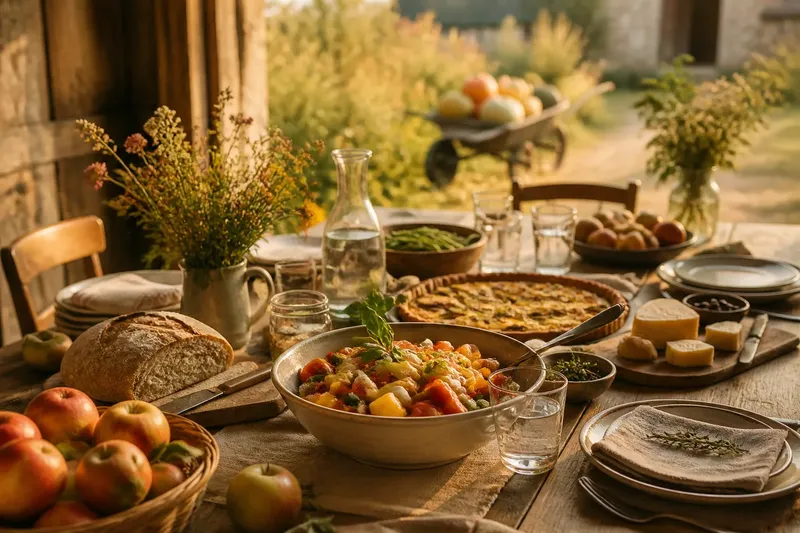
The common mistake with a harvest supper is choosing a menu before checking what is ready; it costs time, creates unnecessary shopping and can leave the season’s best produce on the sidelines. A small harvest supper works better when the garden, orchard or nearby grower sets the meal’s direction, and the invitation stays flexible enough to match what is actually available.
Start with the harvest
Begin by asking what can be picked or collected close to the gathering, not what a seasonal menu is supposed to contain. A basket of beans, a box of windfall apples, a few squash, herbs from a doorstep pot or surplus potatoes from a neighbor can each suggest a meal. The point is to give one or two available ingredients a clear place, rather than forcing every item into every course.
Sort the produce by how it can be served: raw, cooked simply, or saved for another day. Tender leaves and ripe tomatoes may suit a shared salad; potatoes and roots can be roasted in a single pan; bruised apples can be cooked down for a spoonable dessert. If the harvest is modest, let it be a garnish or side dish and build the rest of the meal from dependable pantry staples.
- Plenty of one ingredient: Make it the center of one dish, with a familiar accompaniment.
- A little of several things: Serve them as a tasting board, salad additions or small sides.
- Only a few usable items: Choose a simple meal that needs little produce, then add one seasonal detail.
Say you have a small crate of late tomatoes, a handful of basil and more bread than the household needs. You could make a large tomato salad, ask a guest to bring cheese, and set out toasted bread; the tomatoes remain the focus, while the meal does not depend on a larger harvest appearing.
Choose by circumstance
The right format depends less on how festive the occasion sounds than on what the host can comfortably manage. Decide whether guests are coming to a home kitchen, a barn-adjacent room, a community hall or an outdoor table. Then choose a meal that suits the available shelter, serving space and number of hands.
If you are hosting at home
Choose one main dish that can be prepared ahead, such as soup, a baked vegetable tart or a pot of beans, and add the harvest as a side. This fits a host who wants to sit down with guests instead of tending several pans. Set the table before people arrive and keep the serving style informal.
If the gathering is outdoors
Use food that can be carried and served without delicate timing: bread, a sturdy salad, cheese, fruit and a dish kept safely hot or cold as appropriate. This suits a garden, yard or field edge where the view is part of the evening but weather may change the plan. Have an indoor fallback or a clear covered space, rather than making the meal depend on ideal conditions.
If a local group is joining in
Choose a shared-table meal with clear contributions: one person brings bread, another a pot of soup, another a dessert, while the host coordinates the harvest ingredient and serving pieces. This fits a group with varied cooking confidence because each person can take a modest, distinct role. Ask about dietary needs before assigning dishes, and make sure the menu has a substantial option that does not depend on one person’s special accommodation.
Share the small jobs
Delegation works best when each task has an owner and a visible finish. “Help with supper” is vague; “wash the apples and put them in the bowl” is easy to accept and complete. Keep jobs short, and leave the host responsible for the overall menu and any food-safety decisions.
- Pick or collect the produce and remove anything spoiled.
- Wash, dry or trim ingredients suited to the meal.
- Bring a named item, such as bread, butter or a dessert.
- Set out plates, serving spoons, napkins and drinking water.
- Welcome arrivals and point them toward the table or drinks.
- Clear dishes and gather leftovers into containers after the meal.
Offer jobs when you invite people, not as a surprise at the door. Give guests an easy way to decline or choose another task; someone who cannot cook may be glad to arrange chairs, pour drinks or bring a jar of preserves. For storage, cooking and serving, follow food labels, producer instructions and applicable local rules.
Keep the menu forgiving
A harvest supper does not need a succession of courses. One filling dish, one fresh or cooked seasonal side, bread and a simple dessert can make a generous table. Keep seasoning and presentation straightforward enough that a late change in the harvest does not require rewriting the plan.
It is not worth the effort to make every ingredient look coordinated, carve vegetables into decorations or prepare several dishes that all need the oven at once. Those touches add work without making the gathering more welcoming. A handwritten card naming the grower or garden, if that feels useful, is enough to connect the food to its source.
Leave room for the evening?
How much food should I plan?
Plan one satisfying main dish and a few supporting items, then ask guests about contributions before buying or cooking more. A modest surplus is easier to share than a menu that keeps the host occupied all evening.
What if the harvest changes?
Keep the menu anchored by a flexible dish, such as soup, a tart or a grain-based salad, and treat the available produce as an addition. If one ingredient is missing, substitute another that suits the same role rather than trying to recreate an exact recipe.
Should guests bring food?
Yes, if it helps the host and the requests are specific. Assign a category rather than a surprise dish, so contributions complement one another and guests do not all arrive with desserts.
How formal should the gathering be?
Match the tone to the place and the people: a long table, mismatched plates and shared serving bowls can feel complete without a program. A brief welcome and a clear place to put coats or dishes are often all the structure the evening needs.
Let the meal breathe
Once the food is served, resist filling every pause with an activity. People may want to talk about the crop, trade recipes, walk through the garden or simply eat. A small harvest supper is most useful as a reason for neighbors, makers or land-based workers to gather around something they recognize from the place.
For a small harvest supper, make the invitation specific about the setting, what is being served and whether guests are asked to bring anything. Then leave an unassigned stretch of time after the meal; that is often when useful conversations and the best parts of the evening begin.