Market Stall or Farm Gate? Choosing How to Meet a Customer
Market stall or farm gate? Match your goods and available time to the right selling setting, so customers can meet your work without overloading your week.
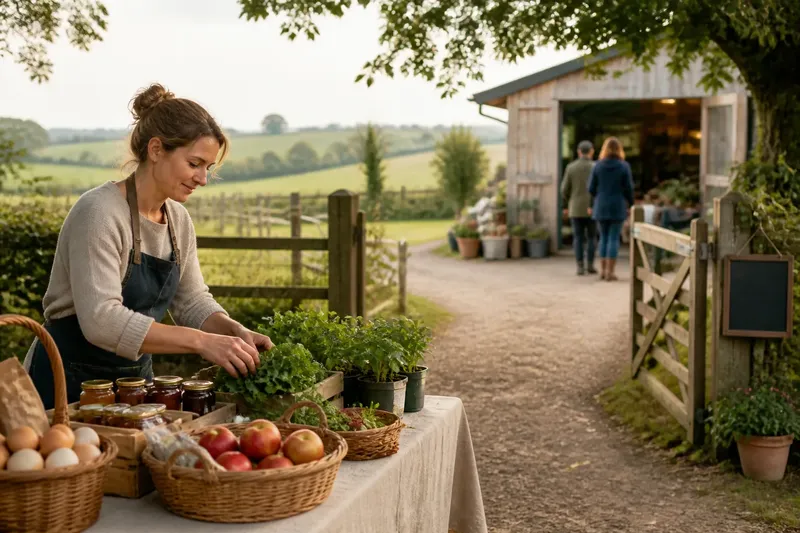
The most common mistake in choosing between a market stall and a farm-gate sale is treating them as interchangeable ways to display the same goods. A poor fit costs more than a quiet selling day: it can pull time away from making, growing, or caring for the place that gives the goods their character. Market stall or farm gate is a decision about where a customer meets your work—and what you must do to make that meeting useful.
Start with the goods
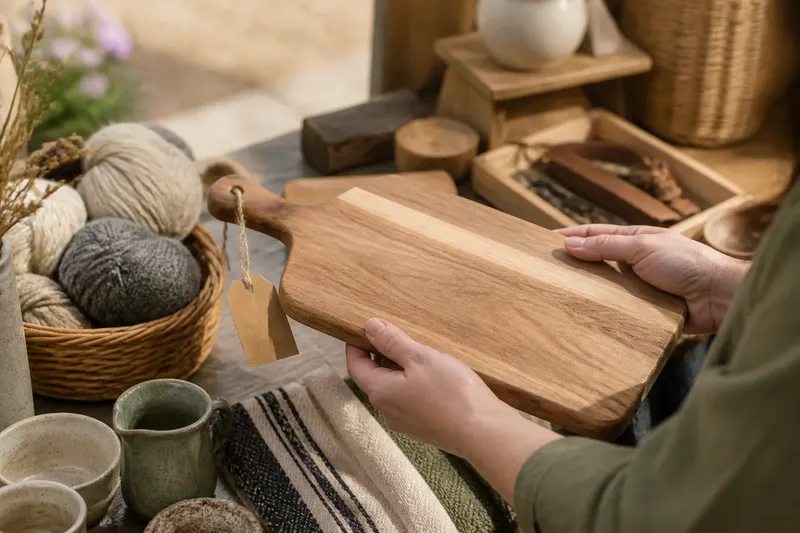
Write down what you plan to sell, then ask what a customer needs to understand before buying. A market stall puts goods in front of people who may be browsing without knowing your name. It suits products that can be recognised quickly, carried away easily, and explained in a short conversation: a basket of apples, jars of preserves, woven goods, or a small selection of seedlings.
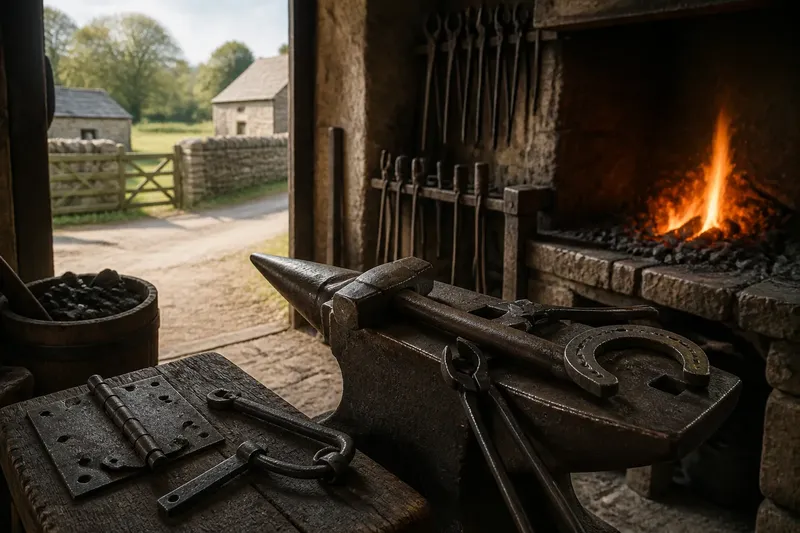
A farm gate makes the place part of the offer. Customers can connect eggs with the laying flock, plants with the growing beds, or a piece of pottery with the rural workshop where it was made. That setting can help where provenance, season, or a visible working landscape gives context. It is less helpful if the visitor cannot tell where to stop, what is for sale, or how to make contact.
Sort your goods into three practical groups:
- Ready to carry: Consider whether a market gives these goods useful passing exposure.
- Place-dependent: Ask whether seeing the land, animals, materials, or workshop makes the product easier to understand.
- Awkward to transport: Check whether a farm-gate arrangement avoids repeated packing, loading, and unloading.
These are starting points, not fixed rules. A farm product can sell well at a market, and a craft good can make sense at a gate if customers have a clear reason to visit.
Match the selling rhythm
A market concentrates selling into a scheduled block. You prepare stock, load the vehicle, travel, set up, talk with customers, pack down, and return. The gathering may bring people to you, but the selling day does not begin when the first customer arrives. Include preparation and recovery time when judging whether the event fits around harvest, production, animal care, or paid work.
A farm-gate sale can appear more flexible because it is close to the source. Yet an open gate or advertised collection window asks someone to be available, keep the sales area orderly, answer questions, and handle arrivals. If visitors come at unpredictable times, the interruption can stretch across a working day. A defined opening period or appointment arrangement may make the commitment clearer, provided customers can understand it.
Look at your actual week rather than an ideal one. Mark the hours when you can leave the holding, and the hours when you can remain available without neglecting other work. Then note the tasks that cannot shift: milking, watering, packing orders, or collecting children. The better setting is often the one whose demands fit the shape of those obligations, not the one that sounds easiest in general.
Choose the customer encounter
At a market, the first task is to earn attention amid other stalls. A clear sign, visible prices, a tidy arrangement, and a short explanation can help a passerby decide whether to stop. Conversation tends to be brief and varied. You may need to explain what an unfamiliar product is, while also serving someone who already knows exactly what they want.
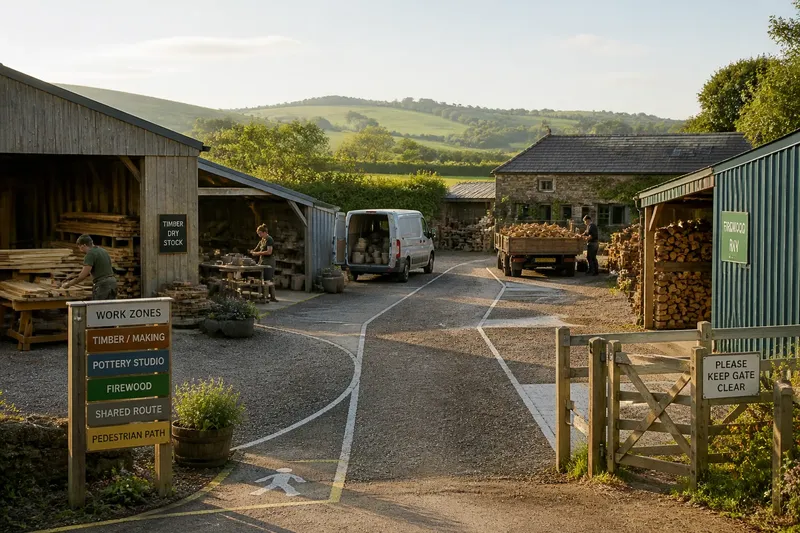
At a farm gate, the visit may feel more personal, but it still needs a simple path. Customers should be able to identify the entrance, understand where to park or walk, and know whether they should knock, pay, or collect. A sign at the road is not enough if the next decision is unclear. Think through the arrival from a visitor’s point of view, without assuming that local familiarity will fill in missing directions.
Consider what sort of conversation helps the sale. If customers benefit from comparing varieties, tasting a permitted sample, or asking about several items, a market may provide a natural occasion. If the useful conversation depends on seeing the setting or meeting the maker where the work happens, the gate may be the stronger choice. Keep the welcome proportionate: not every visitor wants a tour, and not every product needs a long explanation.
Check access and boundaries
Before inviting customers onto a property, look at the approach, parking, signs, walking surface, and separation between the selling area and private or working spaces. Decide which spaces are open to visitors and which are not. Make the boundary legible with signs or a simple layout rather than relying on a visitor to guess. For a market, make a similar check of loading access, the permitted stall footprint, and the route for moving stock.
Food handling, permissions, insurance, trading arrangements, and access requirements can vary with the product and location. Check the relevant local rules and market or landowner conditions before you announce a sales arrangement; for questions affecting legal or safety responsibilities, consult the appropriate qualified professional. Do not improvise around animals, machinery, traffic, or food storage simply to make a selling space look inviting.
Also consider whether someone can buy without requiring your constant attention. A posted price list, clear payment options, and an agreed collection method can reduce repeated explanations. Use only arrangements you can monitor and manage reliably. If a customer needs to ask where to leave money or how to collect an order, the system is not yet clear enough.
Estimate the real workload
Compare the work around the sale, not just the hours spent talking to customers. For a market, list packing, display materials, transport, setup, selling, and pack-down. For a gate, list signs, preparation of the visitor area, opening or collection coverage, customer messages, and the time spent restoring the space afterward. Include the tasks that recur each time, even if each one seems small.
Then compare the demands that are difficult to see on a calendar. A market may bring a concentrated stretch of social attention and leave the rest of the week quieter. A gate sale may avoid a journey but make interruptions harder to contain. If you sell perishable goods, consider how each setting affects what you can carry, display, and take home. If you make goods in small batches, consider whether the selling rhythm leaves room to produce the next batch.
Not every detail deserves elaborate planning. A carefully matched set of decorations, a complex display that takes longer to assemble than the goods to sell, or a grand visitor experience may not repay its effort. Begin with legibility, safe access, accurate information, and a manageable routine.
Make a limited trial
When both settings seem plausible, try one at a time on a modest scale. Choose a small, representative group of goods rather than preparing your full range. Decide in advance what you want to learn: whether customers understand the offer, whether the hours fit your work, or whether transport and setup feel manageable. Keep notes soon afterward, while the practical details are still fresh.
Say you grow herbs and make small bundles for local cooks. Imagine that harvesting and bunching them can be fitted into a morning, but leaving the holding for a full market day would disrupt other work. You might first offer a clearly timed farm-gate collection, with a simple sign and a short list of available bundles. The observable result to watch for is whether customers can find the collection point and complete the purchase within the hours you can staff it; if not, you have a specific arrangement to revise rather than a vague sense that the idea failed.
For a market trial, choose goods that tolerate travel and can be displayed without elaborate equipment. For a gate trial, make the route and collection instructions easy to follow. After either one, note what sold, what questions recurred, how long the surrounding work took, and what was left to manage afterward. Treat these notes as a record of fit, not a promise about future demand.
Market stall or farm gate?
Which setting suits perishable goods?
Either can work if the goods can be handled and presented appropriately in that setting. Think through travel, display, collection timing, and what you will do with unsold stock before choosing.
Is a farm-gate sale always less work?
No. It may remove a market journey, but customer messages, visitor access, and interruptions can spread the work through the day. A defined opening or collection window can make the commitment easier to contain.
Can a seller use both settings?
Yes, if each has a distinct purpose and the combined schedule is manageable. For example, a market can introduce goods to new customers while a gate arrangement serves planned local collections, but the seller still needs clear stock and availability information.
What should a first trial tell me?
Look for practical signals: whether people can find and understand the offer, whether the selling hours fit your other duties, and whether the goods travel or wait well. Those observations help you adjust the setting, schedule, or range.
Set the next decision
Choose the setting that makes the customer’s path clear without making your working week brittle. If the market’s concentrated schedule suits your goods and available time, prepare for the full selling day rather than counting only the hours at the stall. If the farm gate gives customers useful context and you can manage arrivals, make its hours and boundaries unmistakable. If neither fit is clear, keep the first commitment small and learn from the work it creates.
Before repeating the arrangement, change one thing at a time: the opening window, the goods offered, the sign, or the way orders are collected. That makes it easier to tell which adjustment helped. The right choice is not a permanent identity for the business; it is a workable meeting point between what you sell, where you make or grow it, and the time you can honestly give to customers.