The Shared Yard: How a Common Work Space Can Serve Different Trades
A shared yard works better when boundaries, timing, and trade-specific needs are clear, helping rural businesses avoid costly clashes before they start.
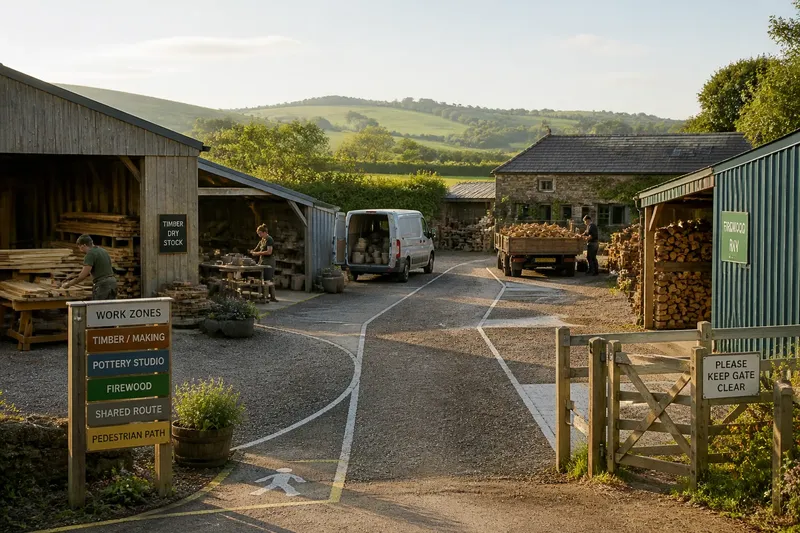
The most common mistake in a shared yard is treating an empty patch of ground as spare space. A timber worker, a smallholding, and a repair business may all see room to use, but each activity brings different traffic, materials, and rhythms. Shared yard planning starts by making those differences visible before anyone moves in a trailer, stack of pallets, or piece of equipment.
Shared yard planning starts with boundaries
Disputes often begin with an object that appears to have no owner: a wheelbarrow left beside a shed, a delivery set down near a gate, or a stack of boards that gradually spreads. The cause is usually not carelessness alone. People have different ideas of what counts as temporary, and an informal arrangement can leave each person guessing.
Walk the site together and mark the areas each trade needs. A hand-drawn yard plan can show private work zones, shared routes, loading space, storage, and places that must remain clear. Use visible cues such as painted lines, durable signs, or labeled bays where they suit the surface and setting. Then agree what may cross a boundary and who can move it if it blocks access.
Keep the plan specific to the work. A beekeeper may need a quiet corner with limited passing traffic; a furniture maker may need a dry place for boards; a fencing contractor may need a clear route for long materials. These are not interchangeable requests, so name the activity and the reason behind its space rather than assigning areas by seniority or habit.
Traffic clashes at the entrance
A narrow entrance can turn an otherwise spacious yard into a daily bottleneck. One trade may bring a van early, another may need room to turn a livestock trailer, and a customer arriving on foot may be unsure where to go. The trouble is often caused by planning storage before considering how people and vehicles move through the site.
Trace each regular journey from gate to work area. Mark turning and unloading zones, pedestrian paths, and any route that needs to stay open. Agree which vehicles may enter, where visitors should wait, and how a delivery driver will identify the correct drop-off point. A simple sign at the entrance and a shared map can prevent a newcomer from choosing the nearest-looking space.
Say a hypothetical pottery business shares a yard with a firewood seller, and both expect deliveries on the same weekday. They could agree that the pottery supplier unloads near the covered shed while the firewood vehicle uses the outer bay, with each booking the entrance before the visit. The observable result would be two clearly assigned unloading places and fewer vehicles waiting in the access lane, rather than an assumption that one arrival will somehow fit around the other.
Timing conflicts across trades
Some activities cannot comfortably happen at the same time. A saw, pressure washer, or reversing vehicle may interrupt quiet work, while a group collecting produce can complicate access for a contractor moving materials. A calendar helps, but only if it records the demands that matter rather than merely showing who is present.
List recurring noisy work, customer visits, deliveries, and tasks that need uninterrupted access. Then agree which activities can overlap and which need a time slot. Leave room for seasonal changes: haymaking, lambing, winter repairs, or a busy craft period can shift a trade’s routine. Tell partners when a change is likely to affect them, instead of expecting a standing arrangement to cover every season.
It is not worth scheduling every small task or turning a shared yard into a formal booking office. A lightweight shared calendar, a message thread, or a whiteboard at the entrance is enough if everyone checks it and updates changes. Keep the system as simple as the work allows.
Materials that do not mix
Storage problems arise when materials are grouped by convenience rather than by their properties. Timber may need shelter and airflow; feed must stay protected from contamination; scrap metal can create sharp edges; soil, compost, and wash water can spread into neighboring work areas. The cause is a shared-storage rule that says where things go without specifying what must be kept apart.
Agree on separate, labeled storage for materials that could be damaged, contaminated, or mistaken for someone else’s stock. Set expectations for containers, covers, and cleanup, and identify who is responsible for waste and unwanted items. Where a material’s handling depends on its label, manufacturer instructions, or local rules, follow those requirements and get qualified advice if needed.
Tools need the same clarity. If a shared ladder or hand trolley is useful to everyone, mark it as common property and agree where it returns. For equipment that is costly, delicate, or tied to a particular trade, separate storage and named responsibility are usually clearer than a vague offer to “share when needed.”
Noise, dust, and runoff
A yard can feel cooperative on paper while one trade bears the nuisance from another. Dust from cutting, engine noise, muddy vehicle tracks, or water draining across a work area can spoil a neighbor’s task. These problems tend to persist when people describe them as personal irritation instead of identifying the activity, location, and time that cause them.
Talk through what each trade releases into the shared space: sound, dust, light, mud, or wash water. Agree on practical limits such as keeping a particular area clear during quiet work, using an appropriate covered work zone, or cleaning tracked material from a route. If a concern involves exposure, drainage, or a safety hazard, do not improvise a technical fix; consult a qualified professional who can assess the site and relevant requirements.
Raise issues early and describe what would help. “The cutting dust is reaching the packing table when the wind comes from the west” gives partners something concrete to consider. “Your work is always a nuisance” is more likely to turn a solvable yard problem into a dispute about respect.
Who handles shared upkeep?
Common paths, gates, bins, and drainage points can deteriorate because each person assumes someone else is responsible. The usual cause is an agreement about use without an agreement about care. Decide who checks each shared feature, who reports a problem, and how the group will handle work that requires outside help.
Keep responsibilities visible and modest. A rota may suit routine sweeping or checking that a gate is shut; a named contact may be better for arranging repairs or speaking with the landowner. Separate ordinary tidying from specialist work, and do not assign safety-critical repairs to whoever happens to be free. Where legal duties or insurance obligations are involved, ask a relevant professional rather than relying on an informal yard custom.
Questions before sharing a yard?
What belongs in the shared area?
Reserve common space for routes, loading, and equipment that partners have expressly agreed to share. Give trade-specific stock and work-in-progress a named location so that “temporary” does not quietly become permanent.
How should people book busy periods?
Use one visible calendar or message channel for activities that affect access, noise, or deliveries. Record only the details partners need to plan around, such as the area, time window, and type of activity.
What if a partner keeps blocking access?
Point to the agreed route and explain the practical effect of the blockage, then ask for a specific change such as moving the vehicle to its assigned bay. If the pattern continues, revisit the written yard arrangement with all partners rather than relying on repeated private reminders.
Should every trade share equipment?
No. Share items only when ownership, storage, condition, and responsibility are clear and the equipment suits the work. A dedicated tool may be less troublesome than a common one that is often unavailable or returned in poor condition.
Keep the agreement usable
Put the decisions in a short written agreement: boundaries, access, timing, storage, shared upkeep, and a way to raise changes. Give each partner a copy and review it when a trade, season, or site layout changes. Shared yard planning is most useful when it makes everyday expectations visible, not when it tries to predict every disagreement.
For a yard that serves different trades, start with the next likely point of friction: a delivery, a noisy task, or a material that needs a particular place. Make one clear decision about it together and record who will do what. That small act gives the next conversation a common reference, and lets cooperation grow from the way the yard actually works.